
Voltage Regulator
-
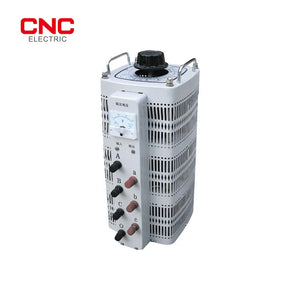
Variable AC Voltage Regulator TDGC2-5000VA | Durable & Efficient Voltage Stabilizer
- Rs.50,000
Rs.71,000- Rs.50,000
- Unit price
- per
Voltage regulator 5000VA is the practical answer when your incoming supply is wandering up and down and sensitive equipment starts misbehaving. On the live CNC Electric Pakistan page, this variable AC voltage regulator is listed at Rs.50,000, with the local sale page describing it...- Rs.50,000
Rs.71,000- Rs.50,000
- Unit price
- per

What is a voltage regulator (variac)?
A voltage regulator (also called a variac or auto-transformer) is a continuously-variable single- or 3-phase autotransformer whose output voltage can be adjusted by a rotating brush across the windings. Used in motor test benches, laboratory equipment commissioning, voltage-sensitive equipment burn-in, and for compensating long-term WAPDA voltage sag. Distinct from a voltage stabilizer (which auto-regulates) and an inverter (which converts DC to AC). The CNC TDGC2-5000VA 1-phase variac (220 V in, 0–250 V out) and TSGC2-5000VA 3-phase variac are the standard Pakistani-market sizes; complies with IEC 60076 for transformers.
| Model | VA | Phase | Vin / Vout |
|---|---|---|---|
| TDGC2-5000VA | 5000 VA | Single-phase | 220 V → 0–250 V |
| TSGC2-5000VA | 5000 VA | 3-phase | 380 V → 0–430 V |
Available on order at cncelectric.pk — 4–6 week lead time for fresh import. See the available-on-order catalogue.
Updated: September 2026 · CNC Electric Pakistan
Voltage Stabilizer / Regulator — Pakistan Quick Answer (May 2026)
A voltage stabilizer (also called automatic voltage regulator, AVR) in Pakistan continuously adjusts incoming WAPDA / K-Electric voltage to maintain a steady 220V ± 10V output, regardless of mains swings between 140V and 280V. Unlike a voltage protector (which only disconnects in extremes), a stabilizer keeps power flowing — essential for inverters, refrigerators, water pumps, and CNC machines that can't tolerate voltage drops. CNC 2026 prices range from Rs. 8,500 (1 kVA) for single appliances to Rs. 185,000 (30 kVA 3-phase) for whole homes / commercial.
| Use Case | Capacity | Type | 2026 PKR |
|---|---|---|---|
| Single fridge / TV | 1 kVA single-phase | Servo-motor | 8,500 |
| 1.5 ton AC dedicated | 3 kVA single-phase | Servo-motor | 15,500 |
| 2 ton AC + lights | 5 kVA single-phase | Servo-motor | 22,500 |
| Whole single-phase home | 10 kVA single-phase | Servo / Static | 42,000 |
| Shop / small office | 15 kVA single-phase | Servo | 65,000 |
| 3-phase house / shop main | 15 kVA 3-phase | Servo 3-phase | 85,000 |
| Commercial / 3-phase factory | 30 kVA 3-phase | Servo 3-phase | 185,000 |
Sizing rule: Total VA = sum of all appliance VA × 1.25 safety margin. 1.5 ton AC ≈ 1,800 VA; refrigerator ≈ 400 VA; lights/fans ≈ 100 VA each. For Pakistani 5-marla home with one AC: 5 kVA stabilizer. For 10-marla with two ACs: 10 kVA.
Stabilizer vs protector: Don't buy a stabilizer if your voltage is mostly between 190-240V — a voltage protector at PKR 1,500 handles occasional spikes for 10× less. Only buy a stabilizer if voltage chronically falls below 170V (typical in rural Punjab, parts of KPK).
Voltage Regulator Price in Pakistan 2026 — Complete Buyer's Guide
A voltage regulator is any device that maintains a stable output voltage despite changes in input voltage or load current. The term covers a wide range of products — from tiny IC chips on a PCB to wardrobe-sized industrial stabilizers for CNC machine tools. This guide explains the three main types of voltage regulators, when each is the right choice for Pakistani users, and what CNC Electric stocks for industrial and laboratory use.
CNC's primary voltage regulator product is the TDGC2 / TSGC2 series variable AC voltage regulator (manual variac), priced from Rs. 50,000 for a 5 kVA single-phase unit. For home and shop voltage stabilization on normal WAPDA supply, our voltage protector range (Rs. 1,750 – 9,700) is typically the better answer.
What Is a Voltage Regulator?
A voltage regulator is an electrical or electronic device that produces a stable output voltage from a variable input. The function is simple — keep output constant whether input rises, falls, or the load draws more or less current. The implementation varies hugely depending on the application:
- Tiny PCB chips (e.g. 7805, 7812, LM317): a few rupees each, deliver 5 V or 12 V at small currents for hobby electronics and embedded boards.
- Mains AC stabilizers (AVR): Rs. 8,000 – 250,000+, deliver stable 220 V to homes, shops or factories from wildly varying WAPDA voltage.
- Industrial variable autotransformers (variac): Rs. 50,000 – 240,000, give the operator manual control over output voltage for testing, calibration, or precision CNC supply.
- Switching regulators (SMPS): built inside almost every modern power supply, laptop charger, and LED driver.
Knowing which type you actually need is more than half the battle. The rest of this guide walks you through it.
The Three Types of Voltage Regulators
| Type | How it works | Typical use | Pakistan price |
|---|---|---|---|
| Linear (series) | A transistor or IC drops the excess voltage as heat to deliver a fixed DC output. Low noise but inefficient. | Hobby electronics, audio circuits, sensors (7805, LM317) | Rs. 20 – 200 per IC |
| Switching (SMPS) | A high-frequency switch chops the input on/off, then filters to output. Efficient (~90%) but more complex. | Phone chargers, computer PSUs, LED drivers, inverters | Rs. 500 – 10,000 module |
| Servo / AVR (electromechanical) | Motor-driven variac or relay-tap transformer adjusts turns ratio in real time to hold output near 220 V. | Home, shop, lab, hospital, factory mains supply | Rs. 8,000 – 250,000+ |
Each of these three families has many subtypes — but for any practical buying decision in Pakistan, you can place your need in one of these three boxes first.
Automatic Voltage Regulator (AVR) — Static vs Servo Motor
For mains-AC home and commercial use, the term Automatic Voltage Regulator (AVR) usually means one of two designs:
| Feature | Static AVR (Relay-Tap) | Servo Motor AVR |
|---|---|---|
| How it adjusts | Switches between transformer taps via relays in steps (e.g. ±5%, ±10%) | Servo motor continuously rotates a variac brush for smooth ±1% regulation |
| Step / smoothness | Stepped output (e.g. 8 voltage steps) | Smooth, continuous |
| Speed | 10-50 ms | 1-3 seconds for full correction |
| Audible noise | Relay clicks during regulation | Quiet motor hum |
| Maintenance | Relay contact wear (5-7 yr) | Brush + motor wear (10+ yr) |
| Pakistan price (5 kVA) | Rs. 12,000 – 25,000 | Rs. 35,000 – 70,000 |
| Best for | Home, shop, normal load | Hospital, lab, sensitive electronics, motor loads |
Most Pakistani home stabilizers (Servo Star, Stabilex, Sollatek, MultiPower) are static / relay-tap designs at the lower price point. Hospital-grade and CNC-machine-grade units are servo motor designs at the higher price.
Function of a Voltage Regulator
The voltage regulator has one job: output a constant voltage regardless of what input voltage or load conditions throw at it. In practice, this means:
- Compensating for low voltage (under-voltage): WAPDA delivers 170 V instead of 220 V at peak demand. The regulator boosts the output back to 220 V using transformer taps or a variac.
- Compensating for high voltage (over-voltage): WAPDA spikes to 260 V after load-shedding ends. The regulator trims output back to 220 V.
- Holding voltage steady under load changes: When a 3 kW AC compressor kicks in, the regulator prevents the inrush from sagging the voltage to nearby sensitive equipment.
- Protecting downstream equipment: ICs, motor windings, and transformer cores all have voltage tolerance bands. Operating outside those bands shortens life.
Note what a voltage regulator does not do: it does not disconnect on dangerous voltage (that is a voltage protector's job). It does not handle nanosecond surges (that is an SPD's job). It does not back up power during outages (that is a UPS / inverter's job). Pick the right device for the right threat.
CNC TDGC2 / TSGC2 Variable AC Voltage Regulator — Industrial & Laboratory
CNC stocks the TDGC2 (single-phase) and TSGC2 (three-phase) series variable autotransformers — manual variac-style voltage regulators where the operator adjusts output voltage with a rotary knob from 0 V to 250 V (single-phase) or 0 V to 430 V (three-phase line-to-line).
| Model | Type | Capacity | Input | Output Range | Price (PKR) |
|---|---|---|---|---|---|
| TDGC2-5 kVA | Single Phase | 5 kVA | 220 V | 0-250 V | Rs. 50,000 |
| TDGC2-10 kVA | Single Phase | 10 kVA | 220 V | 0-250 V | Rs. 100,000 |
| TSGC2-15 kVA | Three Phase | 15 kVA | 380 V | 0-430 V | Rs. 140,000 |
| TSGC2-25 kVA | Three Phase | 25 kVA | 380 V | 0-430 V | Rs. 240,000 |
Built for: CNC machine tools, lab calibration benches, motor test rigs, controlled-voltage manufacturing, scientific instruments, transformer test sets, elevator commissioning, and any application where the user needs to dial in a specific voltage for testing or precision operation. View TDGC2-5000VA →
Built-in protections: over-voltage, over-current, and phase sequence protection on three-phase units. No waveform distortion (pure sine output). 5-year warranty.
For Home & Shop Use — Voltage Protector Is Usually the Better Answer
Most Pakistani homes don't actually need a voltage regulator — they need a voltage protector. Here's the difference:
- A voltage regulator corrects bad voltage by transforming it back to 220 V. Useful if your area sees prolonged under-voltage (below 180 V for hours daily).
- A voltage protector disconnects on bad voltage and reconnects when safe. Cheaper, no running cost, no maintenance.
If your WAPDA supply mostly stays in the 180-260 V range with occasional spikes, a voltage protector (Rs. 1,750 – 9,700) is the right answer. If you genuinely have sustained low-voltage (less than 180 V for 4+ hours per day), then you need a stabilizer / AVR — and you should buy one of the local-brand units (Servo Star, Stabilex, Sollatek) that we don't stock. See our complete Voltage Protector vs Stabilizer guide for the decision framework.
For Electronics & Hobby Use — Linear IC Regulators (7805, 7812, LM317)
If you searched for "voltage regulator" because you're building a Raspberry Pi project, an Arduino sensor board, or a small power supply, you are looking for a linear IC voltage regulator — a tiny chip costing Rs. 20-200 that delivers a fixed DC output. Common parts:
- 7805: fixed 5 V output, up to 1 A. The standard MCU / sensor regulator.
- 7812: fixed 12 V output, up to 1 A. Common for relay boards and small motors.
- 7809: fixed 9 V output, up to 1 A.
- LM317: adjustable 1.25 V to 37 V output via two resistors. The general-purpose lab regulator.
- LM7805 / LM7812: National Semi (now TI) versions of the 7805 / 7812. Functionally identical.
- Zener diode as voltage regulator: simplest possible regulator — a Zener diode plus a series resistor. Used for low-current reference voltages.
CNC does not stock these IC chips. For electronics components, source from Electronation, RasTeck, or local Saddar Bazaar electronics suppliers (Karachi) / Hall Road (Lahore). For the AC-mains voltage regulators that CNC does stock, see the TDGC2 series above.
CNC vs Servo Star vs Stabilex vs Sollatek — Voltage Regulator Brand Comparison
| Brand | Type | Range | Warranty | Best Use | 5 kVA Price |
|---|---|---|---|---|---|
| CNC TDGC2 / TSGC2 | Variable variac | 5-25 kVA | 5 years | Industrial, CNC, lab, test | Rs. 50,000 |
| Servo Star | Servo motor AVR | 1-50 kVA | 2 years | Home, shop, hospital | Rs. 35,000 – 50,000 |
| Stabilex | Relay-tap static AVR | 0.5-15 kVA | 1 year | Home, shop | Rs. 12,000 – 18,000 |
| Sollatek | Relay-tap static AVR | 1-25 kVA | 2 years | Refrigerator, shop, light commercial | Rs. 18,000 – 28,000 |
| MultiPower | Servo motor AVR | 3-100 kVA | 1 year | Industrial | Rs. 28,000 – 45,000 |
| ABB / Schneider | Industrial AVR | 5-500 kVA+ | 2 years | Heavy industrial | Rs. 150,000+ |
CNC and the European brands occupy the variable-variac and industrial-AVR niche. For home and shop stabilizers, local Pakistani brands offer better value — and a voltage protector often eliminates the need entirely.
Sizing Your Voltage Regulator
Match the kVA rating to your peak load, not your average load. For a 1.5-ton AC inverter unit (which is roughly 1.8 kW running, 3 kW startup), use at least a 5 kVA regulator. For a small workshop with one CNC mill plus auxiliary lighting (8-12 kW total), step up to 15 kVA. Industrial users typically size at 1.5× their nominal load to handle motor inrush.
| Load | Recommended kVA | Notes |
|---|---|---|
| Single fridge + lights | 1-2 kVA | Static AVR is fine |
| Home with 1 AC + fridge | 3-5 kVA | Voltage protector usually better value |
| Home with 2-3 ACs | 10-15 kVA | Servo AVR if regulating; protector if disconnect-only |
| Small shop / office | 5-10 kVA | Servo AVR for sensitive POS / electronics |
| CNC machine tool | 10-25 kVA | TDGC2 series for precision; TSGC2 for 3-phase |
| Hospital ward / lab | 15-50 kVA | Servo motor AVR mandatory (continuous output) |
| Small factory | 50-100 kVA | Industrial AVR / step-up transformer |
Bulk & Industrial Pricing
CNC TDGC2 and TSGC2 variable voltage regulators are imported on order with 7-10 day lead time from Lahore. Bulk pricing for educational / lab fitouts, factory commissioning, and switchgear assembler quantities available. Custom-rated units (50 kVA+, special tap voltages, isolation transformer combinations) on consultation. WhatsApp +92 326 1111376 with your application requirement.
Frequently Asked Questions — Voltage Regulator Pakistan
What is a voltage regulator?
A voltage regulator is any device that maintains a stable output voltage despite changes in input voltage or load current. The category covers tiny PCB IC chips (7805, LM317), mains AC stabilizers (AVR), variable autotransformers (variac), and switching regulators (SMPS). Each type targets a different application and price range.
What are the three types of voltage regulators?
The three main types are: (1) Linear regulators — transistor-based IC chips that drop excess voltage as heat, used in hobby electronics and audio circuits; (2) Switching regulators (SMPS) — high-frequency switching circuits used in phone chargers, computer power supplies, and LED drivers; (3) Servo / AVR regulators — motor-driven variac or relay-tap transformers used for mains AC stabilization in homes, shops, and factories.
What is the function of a voltage regulator?
The voltage regulator has one job: output a constant voltage regardless of input voltage or load changes. It compensates for low-voltage (boosting back to 220 V), trims over-voltage spikes, holds voltage steady when heavy loads switch on or off, and protects downstream equipment from operating outside their voltage tolerance bands. It does not disconnect on dangerous voltage (that is a voltage protector), and it does not handle lightning surges (that is an SPD).
What are the two types of AVR (Automatic Voltage Regulator)?
The two main AVR types are: (1) Static / Relay-Tap AVR — uses relays to switch between transformer taps in stepped corrections (typically 4-8 voltage steps), fast (10-50 ms) and cheap, common in Pakistani home stabilizers; (2) Servo Motor AVR — uses a motor-driven variac for smooth continuous correction (±1% accuracy), slower (1-3 seconds) and more expensive, used in hospitals, labs, and CNC machine supply.
What is the cost of a voltage regulator in Pakistan?
Prices vary wildly by type. Home / shop relay-tap stabilizers: Rs. 8,000 – 25,000. Servo motor AVRs: Rs. 35,000 – 70,000. Industrial variable autotransformers (CNC TDGC2 / TSGC2): Rs. 50,000 – 240,000. Linear IC chips for electronics: Rs. 20 – 200 per chip. For most Pakistani homes, a voltage protector (Rs. 1,750 – 9,700) eliminates the need for a stabilizer entirely.
Is a voltage regulator the same as a stabilizer?
Yes — "automatic voltage regulator" (AVR) and "automatic voltage stabilizer" mean the same thing in Pakistani electrical terminology. Both correct fluctuating mains voltage to maintain a stable 220 V output. The terms are used interchangeably.
Do I need a voltage regulator or a voltage protector for my home?
If your WAPDA supply mostly stays in the 180-260 V range with occasional spikes, a voltage protector is the better answer — cheaper, no running cost, no maintenance. If your area sees sustained low-voltage (below 180 V for 4+ hours daily), then you need a stabilizer (regulator). See our Voltage Protector vs Stabilizer guide for the full decision framework.
Does CNC sell home voltage stabilizers?
No — CNC's voltage regulator range is industrial / laboratory only (TDGC2 / TSGC2 variable variacs from Rs. 50,000). For home and shop stabilizers, local brands like Servo Star, Stabilex, and Sollatek are better value. Our CNC voltage protectors (Rs. 1,750 – 9,700) are the alternative we recommend for most Pakistani home users.
What is the difference between 7805 and LM317?
The 7805 is a fixed 5 V linear regulator IC — output is permanently 5 V at up to 1 A. The LM317 is an adjustable linear regulator IC — output is set between 1.25 V and 37 V using two resistors. Both are linear regulators dissipating excess voltage as heat. The 7805 is simpler and cheaper for a 5 V application; the LM317 is more flexible for variable-voltage hobby projects.
Can a voltage regulator damage my appliances?
An oversized or mismatched voltage regulator can. If a static AVR is rated below your peak load, the transformer windings will saturate during inrush and cause distorted output. If the regulator is undersized for a motor load, the slow correction speed of a servo AVR may not respond fast enough to compressor start-up. Match the kVA rating to 1.5× your peak load for motor circuits; check the regulator's correction range (typically ±20% or ±30%) covers your worst-case WAPDA voltage.
More CNC Electric Buyer's Guides
- Voltage Protector vs Stabilizer 2026 — Which One Does Your Home Actually Need
- SPD Price in Pakistan 2026 — Surge Protection Device Buyer's Guide
- Electricity Meter Price in Pakistan 2026 — Digital, Smart & 3-Phase Buyer's Guide
- Magnetic Contactor Price in Pakistan 2026 — 12A-265A CJX2s Buyer's Guide
- Fire Extinguisher Price in Pakistan 2026 — ABC, CO2, Aerosol Buyer's Guide
- Net Metering Pakistan 2026 — Cost, NEPRA Rules & Solar Protection
- MCCB Breaker Price in Pakistan 2026 — MCB vs MCCB vs RCCB Buyer's Guide
- DC Breaker Price in Pakistan 2026 — Solar & Battery Buyer's Guide
- Solar DC Cable Price in Pakistan 2026 — 4mm & 6mm Buyer's Guide
- How to Choose a Voltage Protector / VA Protector — Selection Guide
- How to Wire SPD with Fuse + MCB + RCCB — Fire-Safe Surge Protection
- 1500V Industrial Solar Installation — DC Breaker, SPD, MCCB Sizing
- MCCB & ACB for Industrial Pakistan — Factory Switchgear
- MCB Wiring & Installation Guide — DB Box Layout, Torque
- AC Breaker for Air Conditioner — 1, 1.5, 2, 3 Ton Sizing
- Solar Combiner Box Wiring — DC Breaker, Fuse, SPD Step-by-Step
- EV Charger Pakistan 2026 — Home & Commercial Buyer's Guide
- CNC Industrial Range — Complete Factory Switchgear Roadmap
- Battery Bank Pakistan — LFP vs Lead-Acid Solar Battery Buyer's Guide
- Solar Inverter Pakistan — Hybrid, Grid-Tie, Off-Grid Selection
- MC4 Connectors Pakistan — Branded vs Generic, Crimping Guide
- PV String Sizing — Voc, Temperature Derating, Inverter Compatibility
- DC Fuse vs DC Breaker — Solar Strings, Batteries & SPD
- Off-Grid Solar System Design Pakistan — Complete Sizing Guide
- Why AC Breaker CANNOT Be Used on Solar — Physics & Risks
- CNC 1500V DC Solar Protection BOM — 100kW to 5MW
- 5 SPD Fire Case Studies Pakistan — Root Cause Analysis