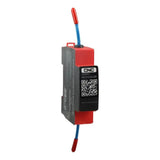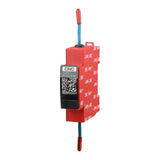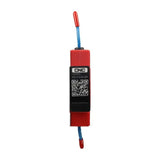

AC FUSE
-
AC Fuse 2A, 6A, 12A, 16A, 20A, 30A | 220V Solar Fuse Holder for PV Protection Systems
- Rs.40
Rs.45- Rs.40
- Unit price
- per
AC fuse 2A-30A is the low-cost replaceable protection option for buyers who want a simple fuse link for 220V circuits instead of changing the whole holder assembly. On the live CNC Electric Pakistan page, this listing shows 2A, 6A, 12A, 16A, 20A, 25A and...- Rs.40
Rs.45- Rs.40
- Unit price
- per
-
AC Fuse 2A-30A 220V | Circuit Protection
- Rs.300
Rs.340- Rs.300
- Unit price
- per
Looking for an AC fuse holder price in Pakistan for a panel, solar AC side, inverter protection point, or control-circuit fuse base? This CNC Electric RT18 fuse holder is built for buyers who want a proper compact fuse-and-holder arrangement instead of loose fuse fixing...- Rs.300
Rs.340- Rs.300
- Unit price
- per
-
Low Voltage Electrical Fuse 16A, 32A, 63A, 125A NT00 | Safe & Durable Protection
- Rs.575
Rs.800- Rs.575
- Unit price
- per
HRC fuse 16A to 125A is the replaceable protection link for NT00 fuse bases in switchboards, feeder sections, control panels, and distribution equipment. This product is listed on CNC Electric Pakistan from Rs.700 and is available in 16A, 32A, 63A, and 125A options. Use...- Rs.575
Rs.800- Rs.575
- Unit price
- per
-
Low Voltage Electrical Fuse Holder NT00 | Safe & Durable Protection
- Rs.725
Rs.1,200- Rs.725
- Unit price
- per
This NT00 HRC fuse holder is the mounting base for low-voltage fuse protection in switchboards, feeder panels, and industrial distribution boards. Price in Pakistan is Rs.550 for the 160A holder. Use it when you need a proper NT00 fuse base inside a panel, not...- Rs.725
Rs.1,200- Rs.725
- Unit price
- per


What is an AC fuse?
An AC fuse is a sacrificial overcurrent protection device for AC mains circuits, available in cylindrical and HRC (High Rupturing Capacity) formats with rated voltages of 400 V or 500 V AC for distribution-grade applications. Pakistani factory motor branches, capacitor banks, and MCCB backup protection use AC fuses where the prospective short-circuit current exceeds the MCCB's Icu rating. Built to IEC 60269 (gG / gM / aM classes), the CNC RT18-32X (cylindrical) and NT00 (HRC) families cover 2 A to 125 A.
| Family | Format | Voltage | Amp range |
|---|---|---|---|
| RT18-32X | Cylindrical | 400 V AC | 2–30 A |
| NT00 | HRC blade | 500 V AC | 16–125 A |
| YCHR17 | Fuse disconnector | 380 V AC | up to 160 A |
For capacitor-bank protection size at 1.6–1.8× capacitor line current per IEC 60269. See the PFC capacitor guide.
Updated: June 10, 2026 · CNC Electric Pakistan
AC Fuse — Pakistan Quick Answer (May 2026)
An AC fuse in Pakistan is a sacrificial overcurrent protection device for AC distribution circuits — typically classified as gG (general-purpose), aM (motor application), or aR (semiconductor) per IEC 60269-2. Available in cylindrical (10×38, 14×51, 22×58) and NH knife-blade formats. Used where ultra-fast interruption is needed (semiconductors, transformers) or where MCBs are cost-prohibitive (large industrial sub-mains). CNC 2026 prices range from Rs. 180 (10A gG cylindrical) to Rs. 1,800 (160A NH gG). Holders sold separately from Rs. 380.
| Application | Recommended Fuse | Format | 2026 PKR (link) |
|---|---|---|---|
| Light circuit (6-16A) | gG 10A 500V AC | Cylindrical 10×38 | 180 |
| Socket circuit (20-32A) | gG 25A 500V AC | Cylindrical 10×38 | 220 |
| Sub-main 40-63A | gG 63A 500V AC | Cylindrical 14×51 | 380 |
| Motor branch (15-30 HP) | aM 32A 500V AC | Cylindrical 14×51 | 450 |
| Factory sub-main (80-125A) | NH gG 100A 500V | NH00 knife-blade | 950 |
| Industrial main (160-200A) | NH gG 160A 500V | NH00 knife-blade | 1,800 |
Sizing rule: gG fuse rating = 1.0-1.25 × continuous load current. aM fuse rating = 1.5-2.0 × motor full-load current. Always verify breaking capacity ≥ prospective short-circuit current (typically 80-120 kA for industrial sites).
Read also: DC Fuses (solar) · All Fuses Overview · Fuse Switch Disconnectors
Cylindrical vs NH (Knife-Blade) Format
| Format | Current Range | Mounting | Use |
|---|---|---|---|
| Cylindrical 10×38 | 1-32 A | DIN-rail holder | Residential, small commercial |
| Cylindrical 14×51 | 2-50 A | DIN-rail holder | Sub-mains, motor protection |
| Cylindrical 22×58 | 25-125 A | DIN-rail or panel holder | Larger sub-mains |
| NH00 knife-blade | 6-160 A | NH base or switch-disconnector | Industrial sub-mains |
| NH1 / NH2 / NH3 | 125-630 A | NH base | Heavy industrial mains, transformer protection |
AC Fuse FAQ — Pakistan
Q1: When do I use an AC fuse instead of an MCB?
(1) When you need sub-millisecond interruption (protects semiconductors, transformers). (2) When the current rating exceeds 125 A and an MCCB is cost-prohibitive. (3) When backup protection is needed downstream of an MCB. (4) Per local code for specific equipment (e.g., NH fuses on transformer secondaries).
Q2: Price of AC fuse in Pakistan?
CNC AC fuse prices in 2026 start at Rs. 180 for 10A gG cylindrical and go up to Rs. 1,800 for 160A NH gG. Holders sold separately: Rs. 380 (cylindrical) to Rs. 850 (NH base).
Q3: What does "gG" mean on an AC fuse?
"g" = general-purpose (full-range protection: overload + short circuit). "G" = wide application class. Most common fuse class for AC distribution. Other classes: aM (motor — short-circuit only), aR (semiconductor — ultra-fast).
Q4: Can I use an AC fuse on DC?
No. AC fuses rely on the 50 Hz zero-crossing of AC current to extinguish the internal arc. On DC, no zero-crossing exists — arc continues burning, fuse melts internally, may catch fire. Use a gPV-class DC fuse for any DC circuit.
Q5: How do I know if my AC fuse has blown?
Most CNC fuses have a small visual indicator (a coloured spot on the end-cap that pops out when the fuse blows). For NH fuses, the indicator is on the top of the cartridge. Always test with a multimeter before replacement to confirm.
Q6: Is CNC AC fuse PSQCA certified?
Yes. All CNC AC fuses carry IEC 60269-2 (cylindrical) or IEC 60269-3 (NH) compliance and PSQCA approval.
Protect your electrical installations with CNC Electric AC Fuses, designed to provide fast and reliable protection against overloads and short circuits. Ideal for residential, commercial, and industrial applications, these fuses ensure the safety of your wiring, distribution boards, and connected devices.
Equipped with a reliable fusing signal device, CNC AC Fuses deliver precise circuit protection while allowing easy monitoring and maintenance. Compact, durable, and easy to install, these fuses are essential for any system where safety, reliability, and performance matter.
Key Features
- Protects electrical circuits from overload and short circuit damage
- High-quality materials ensure durability and long service life
- Compact design for easy installation in DB boxes, panels, and distribution systems
- Reliable fusing signal device for quick monitoring
- Suitable for residential, commercial, and industrial electrical setups
- Maintains system stability and safety under high-demand conditions
Why Choose CNC AC Fuses?
CNC Electric is a trusted brand in Pakistan for premium electrical solutions. Their AC Fuses provide:
- Maximum protection for wiring, breakers, and electrical equipment
- Quick response to prevent equipment damage
- Safe and reliable operation for high-demand applications
- Easy replacement and maintenance for long-term system efficiency
Frequently Asked Questions (FAQs)
1. What is an AC fuse?
An AC fuse is a safety device used in AC electrical circuits to protect electrical equipment from damage caused by excess current. It consists of a metal wire or filament that melts when the current exceeds a certain level, breaking the circuit and stopping the flow of electricity.
2. How does an AC fuse work?
An AC fuse works by interrupting the electrical circuit when an overcurrent (excessive current) flows through it. When the current exceeds the fuse's rated value, the internal metal wire or filament melts, disconnecting the circuit and preventing damage to the system. Fuses act as a quick-response protection mechanism for electrical equipment.
3. What are the different types of AC fuses?
- Cartridge Fuses: These are cylindrical fuses used in various AC applications for both residential and industrial circuits.
- Blade Fuses: Often used in automotive applications but can be found in some AC systems.
- HRC (High Rupturing Capacity) Fuses: Designed for high-current applications, these fuses are used to protect heavy-duty machinery and industrial equipment.
- Thermally-Activated Fuses: They operate based on the temperature rise caused by excess current.
4. What is the importance of choosing the right AC fuse?
Choosing the right AC fuse ensures proper protection of electrical circuits from overcurrent situations. A fuse with a lower rating will blow too easily, while a higher-rated fuse might not protect your system properly. It’s essential to match the fuse rating with the equipment's current requirements for optimal safety and performance.
5. How do I determine the correct fuse rating for my AC system?
The fuse rating should match the amperage rating of the circuit or equipment it is protecting. It is typically recommended to use a fuse that can handle slightly higher than the normal operating current of the equipment, but not too much higher, as this can risk damaging your system in case of faults.
6. What is the difference between an AC fuse and a circuit breaker?
- Fuse: A fuse is a one-time use protection device. Once it blows, it needs to be replaced.
- Circuit Breaker: A circuit breaker is reusable and can be reset after it trips. It provides protection against both overcurrent and short circuits, while a fuse primarily protects against overcurrent.
7. Can I replace an AC fuse with any fuse?
No, you should always replace a blown fuse with one that has the same type, rating, and specifications (voltage, current, and speed). Using the wrong fuse can lead to system failure or even cause a fire hazard.
8. How do I install or replace an AC fuse?
- Step 1: Always turn off the power to the circuit before handling or replacing any fuse.
- Step 2: Remove the old fuse by gently unscrewing or pulling it out (depending on type).
- Step 3: Insert the new fuse of the correct rating.
- Step 4: Turn the power back on and verify that the fuse is functioning correctly.
9. Why do AC fuses blow?
AC fuses can blow due to several reasons, including:
- Overcurrent: An excessive flow of electrical current through the circuit.
- Short Circuits: A direct connection between live and neutral conductors can cause a surge in current, blowing the fuse.
- Faulty Equipment: A malfunction in connected electrical equipment can cause high current flow, leading to fuse failure.
- Aging: Over time, the fuse may weaken and blow under normal conditions.
10. How can I prevent my AC fuses from blowing?
To minimize the risk of fuses blowing, ensure that:
- Your electrical system is properly maintained.
- You use the correct fuse rating for all circuits and equipment.
- Avoid overloading circuits by connecting too many devices to a single outlet.
- Perform regular inspections of wiring and equipment to catch potential faults early.
11. What are the signs that a fuse has blown?
The most obvious sign that a fuse has blown is a complete loss of power to the circuit or device it is protecting. Other signs include unusual smells or visible damage around the fuse holder or device.
12. Can AC fuses be reset?
No, fuses cannot be reset. Once blown, they need to be replaced with a new fuse of the same rating and type.
13. Are AC fuses safe to use?
Yes, AC fuses are generally very safe when used correctly and properly rated for the equipment. They provide a quick and reliable method of disconnecting power in case of electrical faults, protecting both equipment and users from damage or injury.
14. Where can I buy AC fuses?
AC fuses are available at electrical supply stores, hardware stores, and online marketplaces. Make sure to purchase from a reliable supplier to ensure t`tggbbb8he quality and authenticity of the fuses.
15. How long do AC fuses last?
AC fuses generally last for many years, but their life expectancy can be affected by the type of circuit, operating conditions, and whether they are used frequently. Fuses that experience frequent overcurrent situations may blow more often and need replacement sooner.
16. Can I use an AC fuse in DC circuits?
No, AC fuses are designed for alternating current (AC) and should not be used in direct current (DC) circuits. DC circuits require specific fuses that can handle the continuous direction of current flow.
Related: Browse All AC Protection Products →