

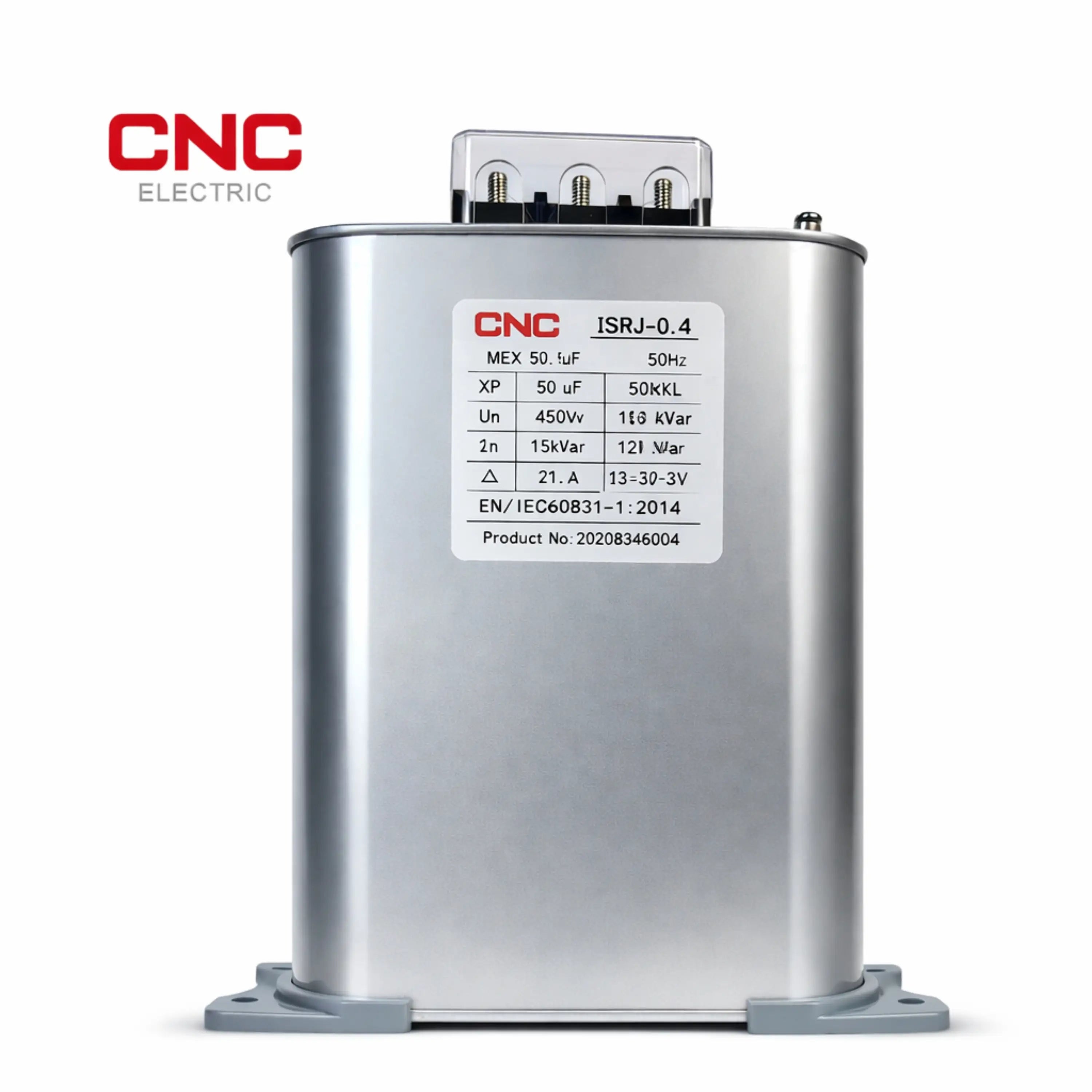
Low Voltage Shunt BSMJ0.44-15-3, BSMJ0.44-25-3, BSMJ0.44-50-3 Power Capacitor | Reliable Reactive Power Compensation front view Pakistan
Low Voltage Shunt 220V 15KVAr, 25KVAr, 50KVar Power Capacitor | Reliable Reactive Power Compensation - Low Voltage Shunt BSMJ0.44-15-3, BSMJ0.44-25-3, BSMJ0.44-50-3 Power Capacitor | Reliable Reactive Power Compensation front view Pakistan

Low Voltage Shunt 220V 15KVAr, 25KVAr, 50KVar Power Capacitor | Reliable Reactive Power Compensation

Rs.6,700
Rs.14,500
Rs.6,700
10 customers are viewing this product
Capacity (kvar): 220V 15KVAr
Subtotal: Rs.6,700
Low Voltage Shunt BSMJ0.44-15-3, BSMJ0.44-25-3, BSMJ0.44-50-3 Power Capacitor | Reliable Reactive Power Compensation front view Pakistan

Low Voltage Shunt 220V 15KVAr, 25KVAr, 50KVar Power Capacitor | Reliable Reactive Power Compensation

Rs.14,500 Rs.6,700

Low Voltage Shunt 220V 15KVAr, 25KVAr, 50KVar Power Capacitor | Reliable Reactive Power Compensation

Rs.14,500 Rs.6,700
Capacity (kvar): 220V 15KVAr

Power factor capacitor is the simple, proven fix when a factory bill starts showing weak power factor and your motors keep dragging useless reactive load through the panel. This CNC BSMJ listing covers 15 kVAr, 25 kVAr and 50 kVAr low-voltage capacitor steps for 0.44 kV class duty, with live Pakistan pricing already shown on the product page. It suits capacitor banks, APFC panels and manual PF correction where you need a known kVAr step instead of trial-and-error buying.

Key Features and Specifications

Feature Why it matters
15, 25 and 50 kVAr sale variants Lets you pick a correction step that matches actual plant load instead of oversizing the bank
0.44 kV class local listing Suitable for common low-voltage reactive power correction panels in industrial sites
Self-healing BSMJ family Published by CNC as a self-healing type, which is the right direction for dependable PF correction duty
Built-in discharge resistor and safety cut-off Helps the unit discharge after switch-off and improves safety in panel maintenance
Low-loss published family design Less self-heating is good news in Pakistani plant rooms where summer temperature is already punishing
Compact local variants with listed dimensions Makes enclosure layout easier when you are planning space inside a capacitor bank or APFC panel

For this product, the live Pakistan page already gives the three things buyers care about first: the kVAr step, the physical size and the actual sale price. CNC’s official BSMJ family data then adds the installation limits installers normally check before putting a capacitor inside an APFC bank or fixed correction panel.

Technical Specifications

This description uses only data published on the live product page and official CNC BSMJ family information. Exact microfarad values, rated current by local 0.44 kV listing, harmonic-duty suitability and detuned-reactor matching are not separately listed on the Pakistan product page and have not been guessed.

Parameter Value
Product family BSMJ low-voltage shunt power capacitor, self-healing type
Local sale variants 15 kVAr, 25 kVAr, 50 kVAr
Local voltage class naming 0.44 kV class as shown on the Pakistan listing
Frequency 50/60 Hz family use
Standards IEC 60831-1:2017 family reference; older CNC page also notes IEC 60831 / GB-T 12747 family compliance
Ambient temperature -25°C to +50°C published family range
Humidity Up to 85% RH family reference
Altitude Below 2000 m family reference
Capacitance tolerance -5% to +10%
Loss tangent ≤0.1% at 20°C, published for the BSMJ family
Maximum permissible over-voltage 110% of rated voltage
Maximum permissible over-current 130% of rated current
Residual discharge target 75 V or lower within 3 minutes after power-off, per family data
Published safety notes Built-in discharge resistor, safety cut-off, low-loss self-healing construction, no-oil-leakage claim on official family page

Product Range and Models

Model Rated Output Dimensions Price (Rs.)
BSMJ0.44-15-3 15 kVAr 167 × 57 × 210 mm 13,000
BSMJ0.44-25-3 25 kVAr 180 × 70 × 220 mm 20,000
BSMJ0.44-50-3 50 kVAr 180 × 95 × 345 mm 45,000

The price jump from 15 to 50 kVAr is not cosmetic. You are buying a much larger reactive power step for a heavier motor base. If your panel only needs one correction step for a smaller workshop load, the 15 kVAr unit is the sensible buy. If you are correcting a more serious inductive load in a textile line, compressor room or mixed industrial panel, the larger steps make more sense.

Applications in Pakistan

Use case Suggested step Why it fits
Small lathe or mixed machine panel in Sialkot 15 kVAr Useful where a small workshop wants one practical PF correction step without overbuilding the bank
Compressor and pump duty in Karachi 25 kVAr A good middle size when compressor motors or HVAC auxiliaries keep dragging PF down during running hours
Textile process line in Faisalabad 50 kVAr Makes sense where multiple motors are already working and the panel needs a stronger correction step
Building services and chillers in Lahore or Rawalpindi 15 or 25 kVAr Common when loads are medium-sized and you want cleaner PF without jumping straight to a large bank
Growing industrial panel in Peshawar or Islamabad 25 or 50 kVAr Useful when a panel is moving from light duty to more continuous motor-based load and reactive compensation needs to catch up

Most buyers do not have a capacitor problem. They have a power factor problem. That usually shows up as a poor PF reading on the meter, unnecessary reactive burden on the transformer, extra current in the feeder and an APFC panel that is either undersized or poorly stepped. The real job of this product is to give the panel designer a clear correction block that can be switched by the right contactor and protected by the right breaker.

Sizing and Selection Guide

Do not buy capacitor kVAr by guesswork. Check your existing PF, running kW and switching pattern first. The table below is only a practical starting point for buyers who need a quick sense of direction before final panel sizing.

Your situation Choose this variant Why
One small fixed correction step for a workshop or machine group 15 kVAr Best entry point when the panel does not need a large bank and you want a clean first correction block
Mid-size APFC step for compressors, pumps or mixed inductive load 25 kVAr Balanced size for sites that need more than a token step but not a heavy correction stage
Larger industrial correction stage in a textile, process or heavier motor panel 50 kVAr Useful where the reactive burden is already serious and a small can will not move the PF enough
Site has harmonics from VFDs, inverters or non-linear loads Do not choose on kVAr alone A simple capacitor step may need a detuned reactor or different PF correction design

CNC vs Competitors

Point CNC BSMJ listing Loose open-market capacitor Higher-cost multinational option
Visible local pricing Yes, live page shows all three prices Often depends on shop, city and stock Usually higher and dealer-driven
Published family design direction Self-healing, low-loss, built-in discharge resistor and safety cut-off are published for the BSMJ family Varies a lot; many buyers only get a box and a verbal claim Usually strong, but not always stocked locally in all kVAr steps
Dimensions on sale page Yes Not always easy to confirm before buying Usually available through catalog or distributor
Best fit Buyers who want a defined kVAr step with visible Pakistan pricing Only if you fully trust the source and accept inconsistent documentation Projects where budget is less sensitive than brand policy

What This Product Does NOT Protect Against

A power factor capacitor does not replace a breaker, SPD, thermal overload relay or voltage protector. It will not stop short circuit current. It will not save a motor from overload. It will not protect a feeder from lightning or switching surge. It will not cure harmonic distortion by itself. It also does not replace proper APFC logic. If your site has frequent surge events, add an SPD. If the capacitor bank uses switched steps, use the right contactor. If the feeder needs branch protection, use the right circuit breaker.

Installation Guide

  1. Confirm your target PF and required correction step before selecting 15, 25 or 50 kVAr. Do not size the capacitor from guesswork or from motor HP alone.
  2. Mount the unit inside a properly ventilated capacitor bank or APFC panel. Leave clean spacing so heat does not build up around the can.
  3. Use a capacitor-duty switching device, not an ordinary undersized contactor. This matters because capacitor switching current behaves differently from a plain motor load.
  4. Provide upstream protection and, where the site has harmonics, review whether detuned reactors or a different correction design are needed.
  5. After installation, check PF improvement on the meter and verify that the capacitor step enters and exits cleanly without abnormal heating, bulging or nuisance switching.

Add Fire Protection to Your Panel

Protect your panel with a DIN Rail Aerosol Fire Extinguisher — only Rs.2,500. Auto activation. 10-year shelf life. Fire safety guide →

Related Products

  • Magnetic Contactors — capacitor steps must be switched with the right contactor, especially in APFC panels.
  • Circuit Breakers — upstream breaker protection is still required for feeder and panel safety.
  • Surge Protection Devices — useful where the capacitor bank sits near a DB or exposed industrial feeder.
  • Industrial Products — browse panel and control hardware commonly bought with PF correction components.
  • Types of Circuit Breakers — useful if you are also planning branch or incomer protection for the correction panel.
  • SPD guide — good read if the capacitor bank sits in a surge-prone industrial area.
  • Electrical panel fire safety guide — capacitor banks and APFC panels should never ignore panel fire protection.
  • Fire Extinguisher — the final add-on for switchgear and capacitor-bank safety.

Frequently Asked Questions

1) Is this a full capacitor bank or just the capacitor unit?

This listing is for the capacitor unit itself. A full capacitor bank or APFC panel also needs switching, protection, enclosure design and proper control logic.

2) Which size is better for a small factory, 15 kVAr or 25 kVAr?

That depends on your running load and current PF. If you only need one smaller correction step, 15 kVAr is often the safer start. If the plant has a stronger inductive load base, 25 kVAr may be more practical.

3) Can I use the 50 kVAr unit in a small workshop just because I want stronger correction?

Do not oversize it blindly. Too much correction can cause its own problems. Match the capacitor step to measured load and target PF.

4) Does this capacitor reduce my electricity bill directly?

It reduces reactive burden and improves power factor. Whether that turns into a visible bill benefit depends on how your site is metered, how poor the present PF is, and how the overall panel is designed.

5) Can this be switched with an ordinary motor contactor?

Use the correct capacitor-duty switching arrangement. Capacitor switching duty is different from plain motor duty, and the wrong switching device can shorten life.

6) Is this suitable for APFC panels?

Yes, that is one of the normal use cases. The exact step arrangement still depends on the PF controller strategy and the load profile of the site.

7) Can I use this where VFDs and harmonics are present?

Maybe, but not without checking the harmonic condition first. On harmonic-heavy sites, a plain capacitor step may need detuning or a different compensation approach.

8) What does self-healing mean in simple words?

It means the capacitor family is designed so a small local dielectric fault does not automatically become total failure. That is one reason self-healing capacitors are preferred in proper correction panels.

If you need a power factor capacitor for a workshop panel, APFC bank or factory feeder, this CNC BSMJ listing gives you three clear steps with live Pakistan pricing already visible: 15 kVAr, 25 kVAr and 50 kVAr. Use the right step, pair it with the right switching and protection hardware, and do not guess the site requirement. Orders above Rs.10,000 qualify for free delivery. For selection help, WhatsApp 0326-1111376.

See also: Capacitor Banks

---

Returns Policy

You may return most new, unopened items within 30 days of delivery for a full refund. We'll also pay the return shipping costs if the return is a result of our error (you received an incorrect or defective item, etc.).

You should expect to receive your refund within four weeks of giving your package to the return shipper, however, in many cases you will receive a refund more quickly. This time period includes the transit time for us to receive your return from the shipper (5 to 10 business days), the time it takes us to process your return once we receive it (3 to 5 business days), and the time it takes your bank to process our refund request (5 to 10 business days).

If you need to return an item, simply login to your account, view the order using the "Complete Orders" link under the My Account menu and click the Return Item(s) button. We'll notify you via e-mail of your refund once we've received and processed the returned item.

Shipping

We can ship to virtually any address in the world. Note that there are restrictions on some products, and some products cannot be shipped to international destinations.

When you place an order, we will estimate shipping and delivery dates for you based on the availability of your items and the shipping options you choose. Depending on the shipping provider you choose, shipping date estimates may appear on the shipping quotes page.

Please also note that the shipping rates for many items we sell are weight-based. The weight of any such item can be found on its detail page. Shipping: Free delivery across Pakistan. Standard delivery takes 2-5 business days. Cash on Delivery (COD) available. For bulk orders, WhatsApp: +92 326-1111376.

Related Products

Recently Viewed Products